
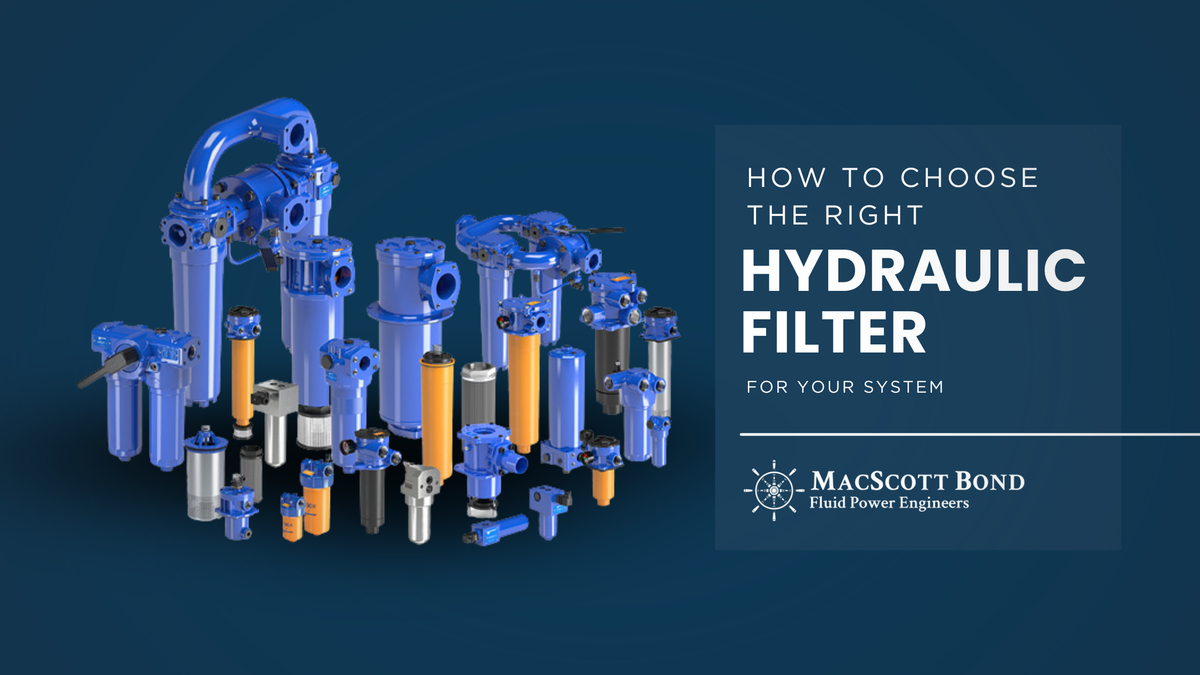
When it comes to maintaining performance, reliability, and efficiency in hydraulic systems, choosing the right filter is critical. A poorly selected hydraulic filter can lead to contamination issues, accelerated wear, unplanned downtime, and expensive component failures. Therefore, having a clear and practical hydraulic filter selection guide is essential for engineers, maintenance teams, and buyers alike.
At MacScott Bond, we supply and support a wide range of filtration solutions and hydraulic components. This guide explains the process of selecting the correct hydraulic filter for your system to ensure long-term system efficiency and cleanliness.
Why Filtration Matters in Hydraulic Systems
Hydraulic fluid contamination is responsible for up to 80% of all system failures. Particles as small as 5 microns can cause significant damage to valves, pumps, and actuators. Effective filtration prevents such issues by removing abrasive particle contaminants before they can harm critical components.
The type of filter you use and where you place it both matter just as much as the filter’s rating. That’s why we recommend assessing your system’s specifications, flow rates, and cleanliness targets before selecting a filter.
To ensure the best filtration solution for optimum total cost of ownership, a risk assessment is necessary. This assessment should consider all likely sources of contamination, their material properties, and their impact on delicate and sensitive components.

The steps to selecting the right hydraulic filter are described below.
Step 1: Understand Your System Requirements
Before selecting a hydraulic filter, you’ll need to gather the following system specifications:
- Maximum flow rate
- System pressure
- Desired ISO cleanliness code
- Viscosity of the fluid
- Operating temperature range
You will need to have a clear understanding of the system layout, including:
- Reservoir: The fluid storage tank.
- Pump: Provides fluid pressure and flow
- Filters: Placed strategically at key locations in the circuit
- Valves: Control the fluid's direction, flow, and pressure
- Actuators: Convert power from hydraulic into mechanical (force and speed)
- Return line: Returns the low-pressure fluid to the reservoir

The flow rate will dictate the appropriate hydraulic filter size, while pressure and viscosity help determine the correct housing and the element media type. This information is also essential if you're selecting a hydraulic filter size for high-flow or high-pressure systems.
If you're unsure of these specifications, we recommend contacting our technical team for guidance or reviewing your system's schematics and operating manuals.
Step 2: Identify the Type of Filtration Required
There are several types of filters used in hydraulic circuits. Each serves a different role depending on where it is located within the system. The different types of filters are described below.
Suction Filters
- Location: Before the pump
- Purpose: Protects the pump from large particles and debris in the tank
- Typical Rating: Coarse – 100 microns or more
- Notes: Not designed to provide fine filtration; risk of pump cavitation if too restrictive
Suction filters are basic protective elements. They’re useful but should not be relied upon as the sole method of filtration. Suction filters are not designed to provide fine filtration. There is also a risk of pump cavitation if filtration too restrictive. When comparing a suction filter vs. a return filter, always remember that suction filters are your first line of defence, not your only one.
Return Line Filters
- Location: On the return line to the reservoir
- Purpose: Capture circuit debris before it returns to the tank
- Typical Rating: Medium – 10–25 microns
- Notes: Very common solution; provide good protection if sized correctly
Return filters are a very common solution as they provide good protection if sized correctly and are ideal for maintaining the cleanliness of the fluid reservoir. These are often the easiest filters to service and monitor. They're available in tank-top mounted, in-line, or even spin-on configurations.
Pressure Line Filters
- Location: After the pump to catch debris generated by normal wear
- Purpose: Protect sensitive components like valves and actuators
- Typical Rating: Fine: 2–10 microns (dependent on the ISO code level of oil cleanliness to which you want to expose the sensitive components within your system)
- Notes: Must be designed, built, and rated to handle full system pressure
Pressure line filters are best used if your hydraulic system includes high-precision servo valves or operates under extreme conditions. They must be designed, built, and rated to handle full system pressure.
Off-Line (Kidney Loop) Filters
- Location: External to main circuit
- Purpose: Continuous fluid conditioning without interrupting the main circuit flow
- Notes: Common in high-volume systems; can include filtration to remove water or oil deterioration by-products (varnish)
Off-line filtration is ideal for systems where fluid cleanliness must remain extremely stable, such as in industrial power units or hydraulic equipment test rigs. They're common in high-volume systems and can include filtration to remove water or oil deterioration by-products (varnish). In-line vs. off-line filtration is a critical decision for large systems.
Step 3: Choose the Right Filter Media
Different filter elements have varying performance characteristics. Your choice of media affects dirt holding capacity, collapse resistance, and efficiency.

| Common Media Types | Characteristics |
| Cellulose (Paper) | Cost-effective; suitable for low-pressure, general-purpose use |
| Glass Fibre | High dirt-holding capacity; excellent micron rating consistency |
| Wire Mesh | Reusable; ideal for coarse or suction filtration |
| Synthetic Media | High-performance, multi-layered options for pressure lines |
At MacScott Bond, we recommend glass fibre or polymer-based elements for most return and pressure filters due to their superior collapse resistance, efficiency, and dirt-holding characteristics.
Step 4: Match the Filter to Flow Rate and Sizing
Selecting the hydraulic filter size is one of the most important factors. If the filter is too small, it will cause excessive pressure drop and may go into bypass mode too quickly as the element gets dirty. This bypass mode allows unfiltered oil to circulate and cause problems. If the filter is too large, it may increase initial and upkeep costs unnecessarily.
Use flow versus pressure drop charts from the filter manufacturer to select the ideal element. This ensures the filter can accommodate your system’s peak flow rate at the expected oil viscosity, which must account for anticipated cold-starting temperature.
You’ll also want to ensure:
- Bypass valve settings are appropriate (e.g. 1.5–3.5 bar, for common scenarios)
- Beta ratios (filtration efficiency) meet your cleanliness target
- Pressure ratings for the filter head and housing are appropriate for all system operating conditions
Step 5: Consider Maintenance, Monitoring, and Accessories
Ease of maintenance is often overlooked. Filters with clogging indicators (visual or electrical) allow predictive servicing before filters go into bypass. Spin-on or top-loading designs reduce downtime during element replacement.
MacScott Bond also offers mobile filter carts, sample ports, and online particle counters for advanced fluid cleanliness monitoring needs.
Selecting Filters for High-Flow Hydraulic Systems
If your system handles a high flow rate, typically over 300 L/min, you’ll need specially sized filters or even duplex arrangements for continuous operation. In these cases, we recommend:
- Larger filter housings with multi-element setups
- Low-pressure drop elements
- Off-line filtration circuits for large reservoirs
Summary: Key Points to Remember
- Know your system specs: flow rate, pressure, ISO cleanliness code
- Choose the correct filter location: suction, return, pressure, or off-line
- Use suitable media: glass fibre often offers the best balance of cost and efficiency
- Size your filter correctly to prevent pressure drops and early bypass
- Don’t forget maintenance indicators and filter replacement intervals
Hydraulic Filters from MacScott Bond
At MacScott Bond, we supply a full range of hydraulic filters suitable for a wide variety of applications. Whether you’re designing a new system or upgrading an existing one, we’re here to help you choose the correct filter type and size.
Explore our hydraulic filter catalogue and filtration accessories today!


