
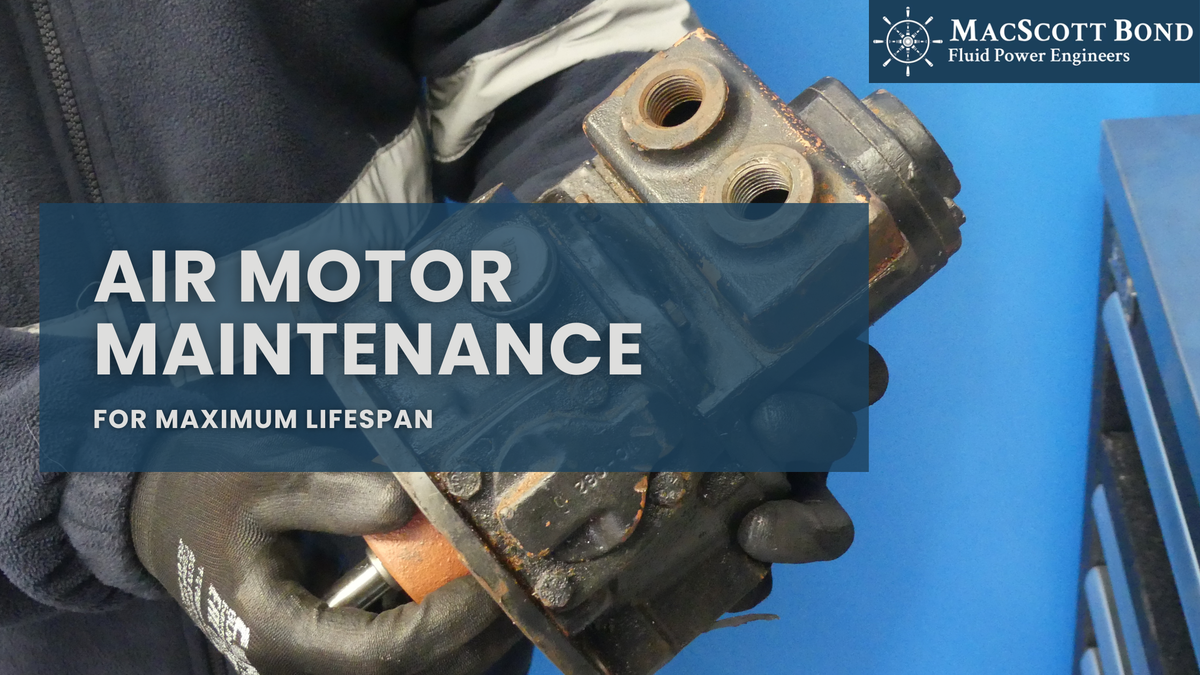
Air motors are reliable, efficient, and versatile pieces of equipment widely used in various industrial applications, including food processing, offshore rigs, and ATEX-certified hazardous zones. However, like any mechanical component, their longevity and performance depend heavily on regular and appropriate maintenance.
At MacScott Bond, we supply, service, and support a wide range of air motors, including piston and vane types, and offer both spares and full repair services for piston models. In this guide, we’ll walk you through essential maintenance practices to help you maximise your air motor’s lifespan and performance.
Why Maintenance Matters
Proper air motor maintenance prevents costly downtime, reduces the risk of failure, and ensures efficient operation. Air motors are particularly sensitive to contaminants in the air line, insufficient lubrication, and irregular servicing intervals. Addressing these factors through preventive maintenance ensures a lower total cost of ownership and improved operational safety.
The Importance of a Consistent, Dry, Clean Air Supply
The air used to power your motor must be clean, dry, and free of particulates. Moisture and debris in the compressed air line are among the leading causes of motor failure. Water promotes internal rusting and washes away lubricants, while particulates can clog, abrade, and damage internal components. To mitigate these issues, your air system should be fitted with:
- Air filters (to remove particulates)
- Water separators or dryers (to eliminate moisture)
- Pressure regulators (to ensure consistent operating pressure)
We recommend installing a high-quality filtration system upstream of the air motor. Consult your manual—discerning manufacturers specify the ISO standards of air cleanliness their motors require for trouble-free operation. Also, inspect system filters and replace contaminated elements regularly as part of your maintenance schedule.
Air Motor Maintenance Checklist
Described below is a basic air motor maintenance checklist you can incorporate into your routine:
Daily or Before Use:
- Check that the air supply is dry and free from debris
- Verify oil mist lubrication (if used) is active
- Inspect hoses and fittings for leaks or wear
Weekly:
- Clean air intake screens
- Check oil levels in lubricators
- Inspect the mounting and alignment of the motor
Monthly:
- Run performance checks (torque, speed)
- Inspect the exhaust port for oil or debris buildup
- Assess wear on any visible components
Annually or Based on Usage Hours:
- Full internal inspection
- Replace worn vanes or seals (if applicable)
- Service bearings and lubricate internal moving parts
Following scheduled servicing intervals based on motor type, application, and environmental severity, and operating hours is essential. MacScott Bond can assist in setting up these intervals and even help maintain a stock of key spares to reduce lead times for our regular customers.
Lubrication Requirements & Recommendations
Proper lubrication is critical to your motor’s performance and lifespan. Lack of lubrication leads to increased friction, more wear, and ultimately premature failure. Most air motors require some form of continuous or semi-continuous lubrication. There are two common approaches to lubricating air motors, as shown below:
- Oil mist lubrication systems (via in-line lubricators)
- Direct lubrication before and after use
For piston air motors, we often recommend the following:
- Shell Tellus S2 V 32 (or equivalent mineral hydraulic oil)
- Mobil DTE Light (ISO VG 32)
- For ATEX-certified models, ensure the lubricant is also compliant with ATEX standards
Apply a few drops of lubricant directly into the air inlet before and after each use, especially for intermittent-use motors. For continuous operations, ensure your mist lubricator is delivering oil at the motor manufacturer’s recommended rate, which is generally one drop per minute for every 20 SCFM of air (sometimes alternatively stated in drops/min for each capacity of motor). Always refer to the motor’s manual (such as the GLOBE piston motor manual) for model-specific recommendations.
In addition to needing air line lubrication, some motors have an internal sump filled with oil to a set level. This oil must be changed as per the manufacturer’s recommendations, or sooner if contamination by water is found to be occurring.
What to Do During Extended Downtime
If your air motor will be out of use for an extended period (e.g., seasonal machinery), take precautions to preserve its internal condition:
- Flush the disconnected motor with clean, dry air
- Lubricate internal components generously with an approved preservative oil strictly following the manufacturer's recommendations. Using an unapproved or incorrect oil, even for storage, can have severe consequences for a system, particularly in specialised environments like those with ATEX certification or a requirement for oil-free air.
- Rotate the motor shaft manually every 2–4 weeks to prevent internal sticking
- Seal off air inlets/outlets to prevent debris ingress
- Store motor in a clean, dry environment
These simple actions will save you from surprise failures when the system is brought back into service.
Preventive Maintenance vs. Reactive Repairs
Preventive maintenance for air motors is always more cost-effective than reactive repair. A seized or damaged air motor often results in halted production, emergency call-outs, and expensive part replacements. Preventive strategies include:
- Monitoring oil consumption and adjusting mist lubrication
- Regularly rotating idle motors to avoid internal sticking
- Periodically replacing seals and gaskets before they fail
- Monitoring unusual vibrations or changes in motor speed/torque
At MacScott Bond, we not only supply air motors and spares, but we also offer repair services for piston models. If your air motor shows signs of wear, don’t wait until failure. Our experienced technicians can disassemble, diagnose, and repair or refurbish your unit to OEM standards.
Partnering with MacScott Bond
MacScott Bond is proud to be a trusted supplier of air motors, parts, and servicing in the UK. We stock a wide range of spares, including vanes, seals, gaskets, and lubricators, and we’re happy to support our regular customers by holding critical stock items to reduce downtime.
Whether you're installing new equipment or maintaining legacy models, our technical team is ready to help you choose the right components, troubleshoot problems, or schedule in-depth servicing. Our air motor repair service, available for piston-type motors, ensures you always have expert support when it matters most.
Your Maintenance Partner for Reliable Air Motor Performance
Maintaining your air motor doesn't have to be difficult, but it does need to be consistent. By following a scheduled servicing plan, keeping a clean and dry air supply, using the correct lubricants, and rotating motors during long downtimes, you’ll protect your investment and keep operations running smoothly.
For spares, technical advice, or repair services, MacScott Bond is here to help. We’ve built our reputation on supporting UK industry with high-quality products and dependable service, and we’re ready to support your air motor fleet for years to come.


